Case study · Public sector procurement
75% lower development costs for EEM
Moving a not-for-profit procurement organisation off a restrictive proprietary CMS and onto WordPress — keeping the design their members knew, keeping every ranking, and handing control back to the internal team.
- 75% Lower development costs Ongoing spend, post-launch
- 0 Redirects required URL structure mirrored exactly
- 100% Content migrated Including member data via CSV import
- In-house Content control No developer needed for updates
When the design isn’t the problem
Efficiency East Midlands (EEM) is a not-for-profit procurement organisation that helps public sector organisations and businesses save money through collaborative procurement. Based in Alfreton, Derbyshire, it operates as a membership organisation supporting businesses throughout the East Midlands.
When EEM first approached us, their existing website design wasn’t the problem. The issue was the cost and complexity of maintaining and expanding it. The organisation had become increasingly frustrated with how long it took to implement new features, and with the ongoing costs involved whenever changes were required.
They needed a solution that would reduce costs, increase flexibility and give their internal team greater control over the website.
The website
Familiar to members, transformed underneath
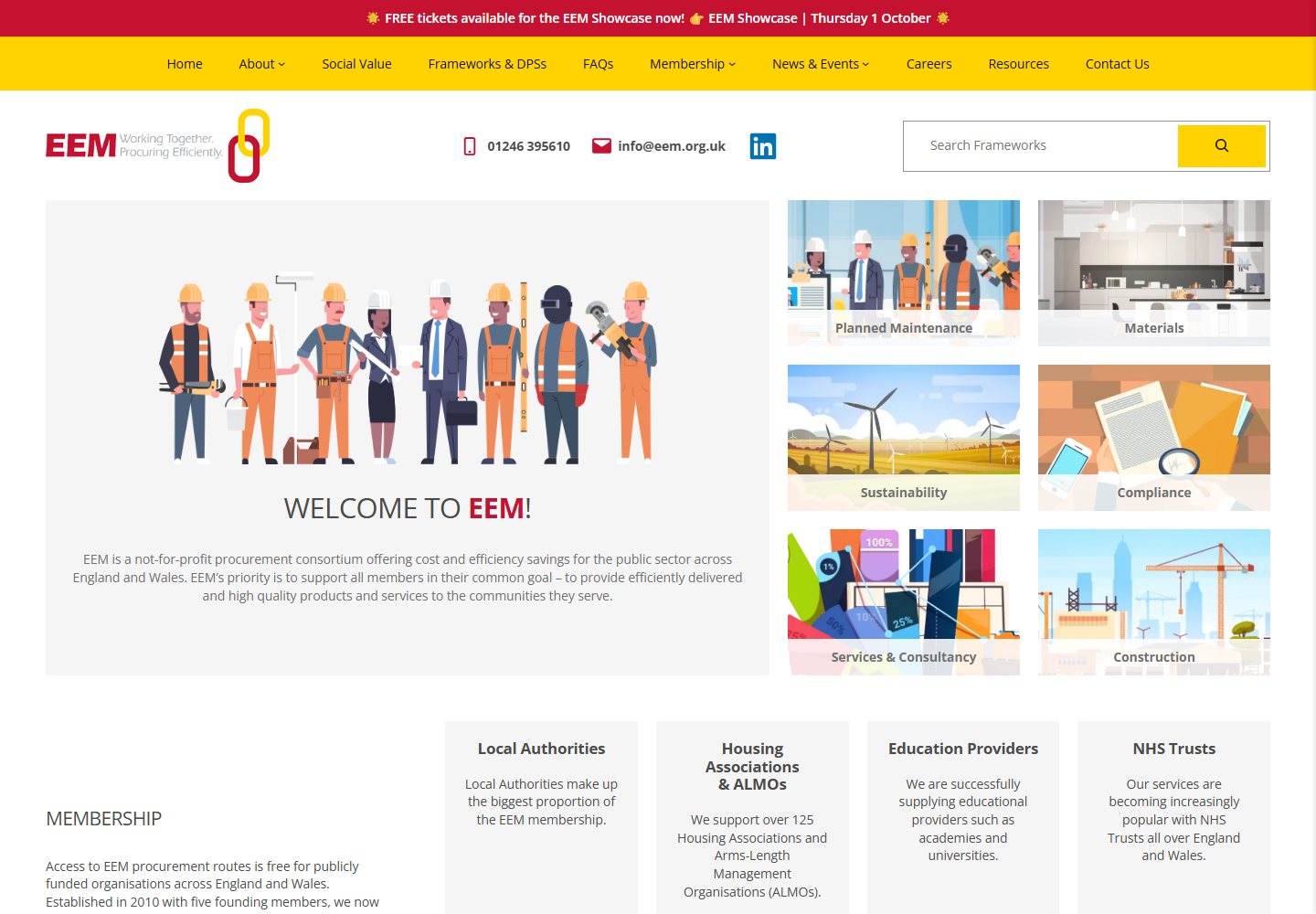
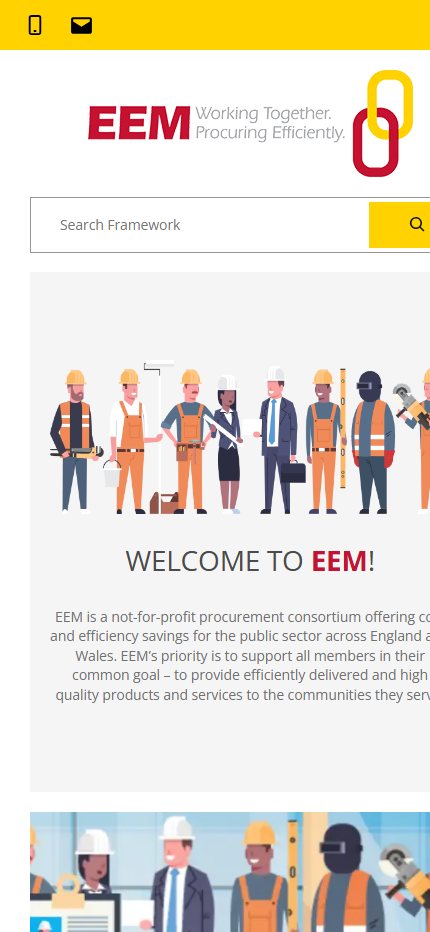
The visual design members knew was deliberately preserved and refined — everything that changed happened under the bonnet.
The problem with the existing website
Following initial conversations and a technical review, we quickly identified the root cause. The previous website had been built using a custom in-house CMS developed by their former web agency. It handled basic content management well enough, but it introduced significant problems whenever the website needed to evolve.
- High development costs for relatively small changes
- Long development timescales
- Limited flexibility when introducing new features
- Dependence on the original developers
In practice, even simple updates could become expensive and time consuming. For a growing organisation that regularly updates member information and publishes new content, that wasn’t sustainable.
Our rebuild approach
After reviewing several options with the client, we recommended a complete rebuild using WordPress — a platform that directly addressed every issue EEM had been experiencing.
WordPress allows non-technical users to manage most website content themselves using a modern visual editor, so EEM staff can update page content, images, links, news posts and member information without picking up the phone to a developer. And its extensive plugin ecosystem means additional functionality can be added without expensive bespoke development — dramatically reducing long-term costs while letting the website keep evolving as the organisation grows.
A design members would still recognise
One key requirement was that the overall visual design should remain familiar to members and users. Rather than completely redesigning the site, we focused on refining and improving the existing design.
What improved
Inside the rebuild
- Improved mobile navigation
- Better page structure
- Faster page load speeds
- Simplified content management
- Modern caching for performance
- All existing content carefully migrated
- Member data imported via structured CSV
- Premium SEO plugin, sitemaps and schema markup
Protecting search visibility through the move
Maintaining search visibility during a rebuild is where most projects lose ground. To avoid any disruption to existing rankings, we mirrored the original website’s URL structure wherever possible. That meant no redirects were required at all — a completely smooth transition onto the new platform, with no lost equity and no crawl errors.
The results
Before vs after
- Ongoing development costs High→−75% Biggest single win
- Updating content Developer→In-house No external dependency
- Speed of updates Slow→Immediate Same-day changes
The new website went live several months ago and replaced the previous platform with no disruption. The most significant outcome has been the reduction in ongoing development costs, down by roughly 75 percent. Just as important is the flexibility: the EEM team now independently manage most updates — creating pages, updating content, uploading images and publishing posts — without external development support. User feedback has been positive too, particularly on navigation and mobile usability.
Paying a developer for every small change?
If your website is expensive to maintain, slow to update or locked to one agency’s proprietary CMS, a rebuild usually pays for itself. Let’s talk about what yours is really costing you.
Website rebuild FAQs
Is rebuilding a website expensive?
Not necessarily. While there is an upfront investment, rebuilding a website on a modern platform often significantly reduces long term development and maintenance costs.
Why do businesses move from custom CMS systems to WordPress?
Many businesses move to WordPress because it provides greater flexibility, a huge plugin ecosystem, and the ability for internal teams to manage content without developer support.
How long does a website rebuild usually take?
The timeframe varies depending on the size of the website, but most rebuild projects typically take between four and twelve weeks.